نمایش نتیجه 1 تا 10 از 91 نتیجه یافت شده برای subsurface:
n: 1. a hand tool that is powered pneumatically. 2. a chamber filled with compressed air, often used offshore in seismic exploration. As the gun is trailed behind a boat, air is released, making a low frequency popping noise, which penetrates the subsurface rock layers and is reflected by the layers. Sensitive hydrophones receive the reflections and transmit them to recording equipment on the boat.
seismic source for ocean seismic work.
ضربه زن صوتی
n: an electric heater screwed onto lengths of tubing and lowered into the well. It raises the bottomhole temperature of the well to prevent solidification of paraffin in subsurface equipment.
n: the ratio between the pressure in the hole and the operating-piston pressure needed to close the rams of a blowout preventer.
n: The ratio between subsurface pressure and working hydraulic pressure which closing BOP rams requires.
the ratio between the pressure in the hole and the operating-piston pressure needed to close the rams on a given BOP design against a particular well head pressure.
n: I. a subsurface hydrocarbon trap that has the features of both a structural trap and a stratigraphic trap. 2. a combination of two or more structural traps or two or more stratigraphic traps.
a trap that has both structural and stratigraphic character.
n: a small hydraulic line used to run fluid from the surface to a downhole tool, such as a subsurface safety valve.
a small diameter line, usually attached to the outside of tubing, which controls the ScSSV or other downhole tools.
v: to relate subsurface information obtained from one well to that of others so that the formations may be charted and their depths and thicknesses noted. Correlations are made by comparing electrical well logs, radioactivity logs, and cores from different wells.
to compare logging and core or other information and account for discrepancies.
همخوانی لایه های زیرزمینی
n: an area in which particular subsurface formations make it difficult to keep a drilled hole straight.
data processing used to shift subsurface signals to their proper depth.
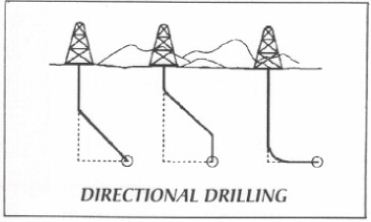
n:1. intentional deviation of a wellbore from the vertical. Although well bores are normally drilled vertically, it is sometimes necessary or advantageous to drill at an angle from the vertical. Controlled directional drilling makes it possible to reach subsurface areas laterally remote from the point where the bit enters the earth. It often involves the use of deflection tools. 2. a technique of river crossing in pipeline construction in which the pipe is buried under the riverbed at very much greater than those of conventional crossings. With this technique, a hole in the form of an inverted arc is drilled beneath the river, and the made-up pipeline is pulled through it.
n: The intentional deviation of a wellbore in order to reach an objective some distance from the rig.
drilling the wellbore in a planned angle of deviation or trajectory.
حفاری جهت دار